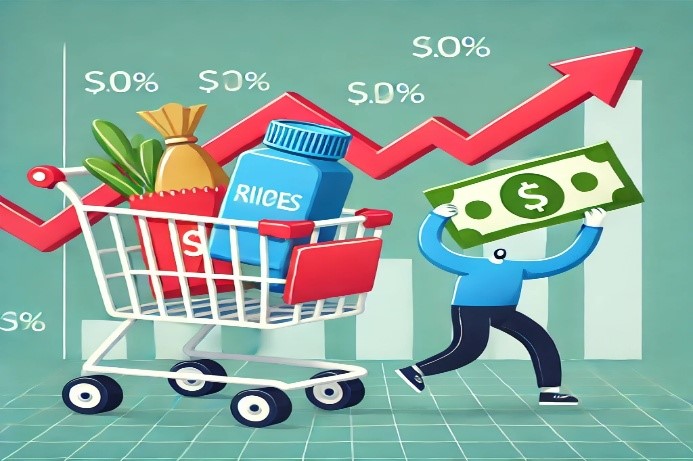


Inflation is a term that you’ve probably heard many times, but do you truly understand how it works and how it affects your everyday life? If you’re unsure about what inflation is, don’t worry—you’re not alone. In this blog, we will break it down and explain how inflation impacts you, especially in the context of Nepal. By the end, you’ll have a clear understanding of inflation, how it works, and its effects on your financial health.
What is Inflation?
Inflation refers to the sustained increase in the general price level of goods and services over a period of time, leading to a decrease in the purchasing power of money. This means that with inflation, the same amount of money will buy fewer goods and services than before. A moderate level of inflation is normal in a growing economy, but when inflation gets too high, it can create financial instability for both individuals and businesses.
The Causes of Inflation
Inflation can happen for a variety of reasons, often a combination of factors. These are the most common causes:
- Demand-Pull Inflation: This occurs when demand for goods and services exceeds supply, leading to an increase in prices. In Nepal, this can be seen during festivals like Dashain or Tihar when demand for food, clothing, and other essentials rises significantly.
- Cost-Push Inflation: When the costs of production increase—such as rising fuel prices or higher wages—businesses often raise their prices to cover these increased expenses. For instance, the cost of transport in Nepal can rise when fuel prices go up, causing prices for goods and services to increase as well.
- Wage-Price Inflation: This type of inflation happens when workers demand higher wages to keep up with rising prices, and businesses, in turn, raise prices to cover their higher labor costs. This can create a cycle where wages and prices continue to rise together, making it harder for everyone to keep up.
How Inflation Impacts Everyday Life in Nepal
Inflation impacts everyone in different ways, and it’s crucial to understand how it affects your personal finances. Here’s how it might change your life:
- Purchasing Power: As prices rise, your money loses its value. For example, if the price of a cup of tea rises from NPR 25 today to NPR 30 next year, you’ll need more money to buy the same items. This means that inflation erodes your purchasing power, and if wages don’t keep up with inflation, you may struggle to afford basic goods.
- Savings and Investments: In Nepal, many people prefer to save money in banks. However, if the inflation rate is higher than the interest rates offered by banks, the value of your savings decreases over time. To combat this, investing in real estate or stocks can be a good hedge against inflation, as their value tends to rise over time. This is why many Nepalese families are increasingly turning to property investments in cities like Kathmandu.
- Wages and Employment: Ideally, wages should rise in line with inflation to ensure that workers can maintain their standard of living. However, in Nepal, wage growth often doesn’t keep pace with rising inflation. For example, if inflation rises by 8% but your salary only increases by 4%, you’ll be able to buy less with your paycheck. This discrepancy can lead to financial stress for many families.
Inflation in the Global Context
While inflation is a concern at the national level, it is also a global phenomenon. Factors like supply chain disruptions, geopolitical instability, and global energy crises can lead to inflationary pressures that affect countries all over the world, including Nepal. For example, when oil prices rise globally, it increases transportation costs, which in turn affects the price of goods everywhere, including in Nepal.
Nepal is also heavily reliant on imports, particularly for goods like fuel and electronics. This makes the country more vulnerable to global inflation. When international prices go up, Nepalese businesses often pass on these costs to consumers, leading to higher prices in the local market.
Inflation in Nepal: Current Scenario
In Nepal, inflation has been a pressing issue in recent years. According to the Nepal Rastra Bank, the inflation rate in 2024 hovered around 6.5%, which is relatively high compared to the previous years. The primary contributors to this inflation were food prices, particularly rice, vegetables, and lentils, as well as fuel costs. Natural disasters like floods also disrupted local production, further driving up prices.
The rise in inflation has impacted Nepali households, especially in rural areas where the cost of basic goods can be a significant portion of income. For instance, the price of essential items like cooking oil, rice, and lentils has increased steadily, making it difficult for lower-income families to maintain their standard of living.
Facts about Inflation in Nepal
Here are some key facts about inflation in Nepal that are important for understanding its impact on the economy and everyday life:
1. Current Inflation Rate:
- As of recent data, Nepal’s inflation rate has hovered around 6.5% (in 2024). This figure is considered relatively high, especially when compared to historical levels of inflation, which have typically been around 4-5% in the past few years. The inflation rate fluctuates based on various factors such as food prices, fuel costs, and external global economic conditions.
2. Food Prices Drive Inflation:
- A significant portion of inflation in Nepal is driven by rising food prices. In 2024, the food and beverage sector was one of the major contributors to inflation. Items like rice, vegetables, lentils, and cooking oil saw price increases. This is particularly impactful in Nepal, where a large part of household spending is on food.
3. Imported Goods and Global Inflation:
- Nepal is highly dependent on imports for many essential goods, such as fuel, machinery, electronics, and raw materials. As a result, global price increases—especially in oil, gas, and other essential imports—directly impact inflation in Nepal. For example, a rise in global oil prices often leads to higher transportation costs, which in turn increases the cost of goods and services within Nepal.
4. Impact of Natural Disasters:
- Nepal is prone to natural disasters, such as floods, landslides, and droughts, which can severely impact local agricultural production. When local crops are damaged or production is disrupted, it causes a shortage of supply, which leads to price hikes. This makes Nepal more vulnerable to food inflation, especially in rural and remote areas.
5. Currency Depreciation:
- The value of the Nepalese Rupee (NPR) against foreign currencies, such as the US Dollar or Indian Rupee, can influence inflation. When the Nepali Rupee weakens against foreign currencies, the cost of imports increases, driving inflation further. This depreciation is influenced by factors such as trade imbalances and foreign exchange reserves.
6. Government Measures:
- To control inflation, the Nepal Rastra Bank (NRB), Nepal’s central bank, adjusts monetary policies, such as changing interest rates or managing money supply. However, inflationary pressures are often difficult to control due to external factors, such as global commodity price increases and the country's dependence on imports.
7. Wage and Income Disparities:
- In Nepal, wages often do not increase in line with inflation. This creates a gap in purchasing power, especially for low-income earners. Many workers, particularly in rural areas, face financial strain as their wages do not match the rising cost of living. The government occasionally attempts to increase public sector wages, but private sector wage adjustments are less frequent.
8. Inflation and Poverty:
- Inflation has a more profound impact on the poor and marginalized communities. With prices rising, the poor struggle to afford basic necessities like food, healthcare, and education. This exacerbates poverty in rural areas, where incomes are already low, and the majority of families rely heavily on agriculture.
9. Effect on Savings:
- Inflation reduces the real value of money saved in banks or other low-yielding investment options. In Nepal, where many people save in traditional ways (such as cash savings or land), inflation erodes the value of these savings over time. People are increasingly looking at other investment avenues like real estate to hedge against inflation.
10. Social Unrest and Inflation:
- High inflation can lead to social unrest, particularly when people struggle to afford basic goods. In Nepal, as in other countries, rising food and fuel prices can lead to protests, strikes, and dissatisfaction with the government’s handling of the economy.
11. Rural Areas Affected More:
- Inflation tends to hit rural areas of Nepal harder than urban centers, as they often face more limited access to goods and services, and their incomes are generally lower. In many rural areas, where subsistence farming is common, inflation means farmers are paying more for seeds, fertilizers, and transportation, which can reduce their profitability.
12. Bank Interest Rates:
- The interest rates offered by banks in Nepal are often lower than the inflation rate. For example, if inflation is at 6.5% and a savings account offers an interest rate of just 3%, the real return on savings is negative. This makes it harder for people to build wealth and save for future needs.
Conclusion: Inflation and Your Financial Health
Inflation is an ongoing challenge for both individuals and businesses. It is a natural economic phenomenon, but when it becomes excessive, it can create financial hardship. In Nepal, inflation is driven by a variety of factors, including global trends, local demand, and rising production costs. The effects of inflation—reduced purchasing power, lower savings value, and higher living costs—are felt by everyone, but it’s essential to be proactive in managing your finances.
To protect yourself from the negative effects of inflation, consider:
- Budgeting: Adjust your spending habits to account for rising prices.
- Investing: Consider long-term investments like property or stocks to keep up with inflation.
- Increasing Income: Seek opportunities for salary increases or additional sources of income to maintain your purchasing power.
By understanding inflation and how it affects you, you can make better financial decisions and safeguard your future.
Stay tuned for more insights on personal finance and economic trends in Nepal! Let us know in the comments if you have any questions or personal experiences with inflation that you'd like to share


Post your comment
⋅
0 comments
have been posted.
More Stories
Follow Us
All Rights Reserved © 2023